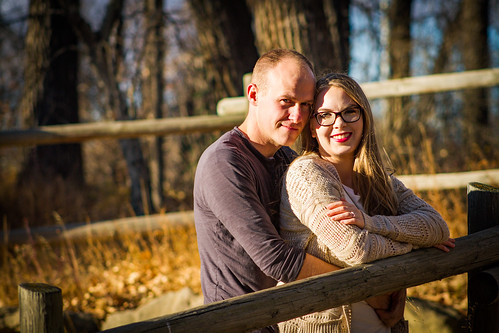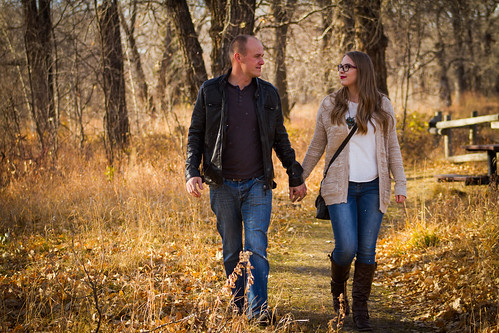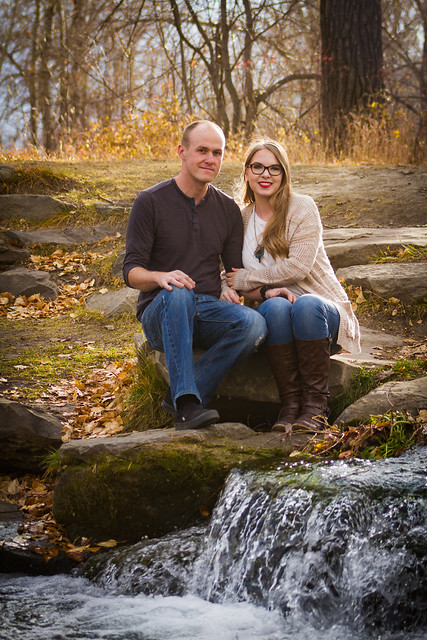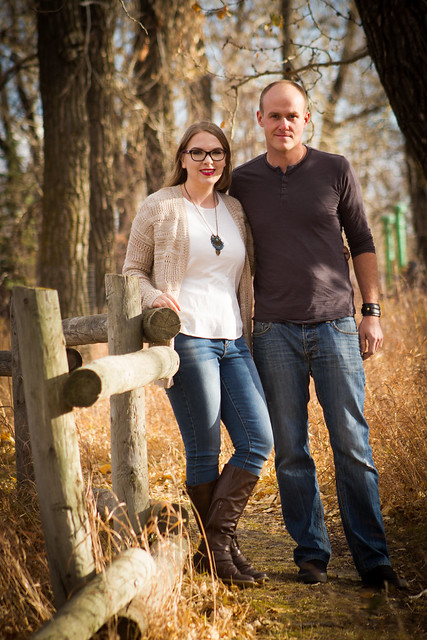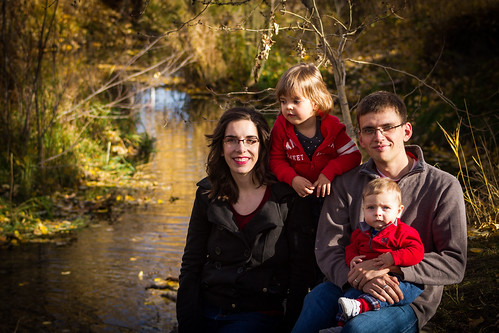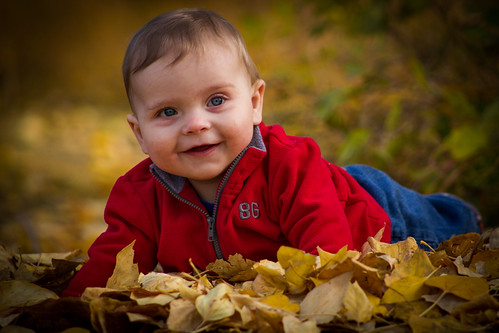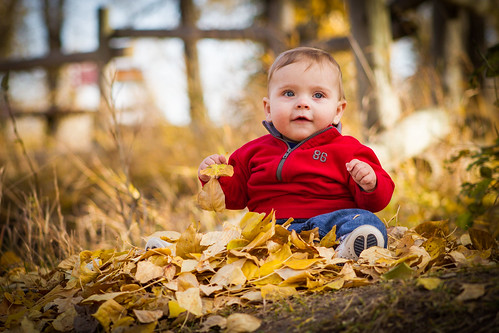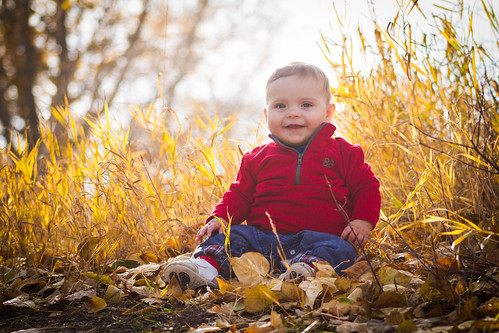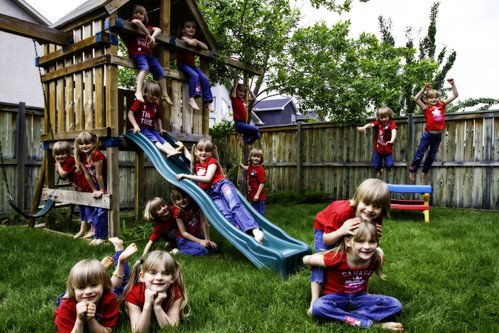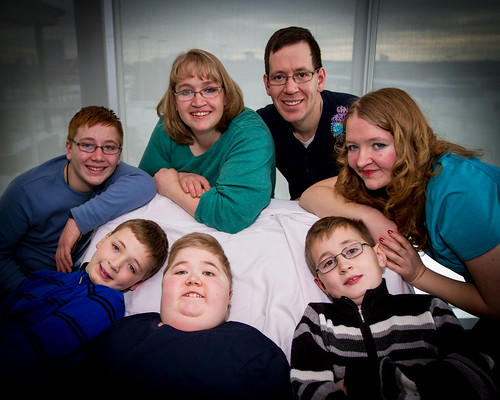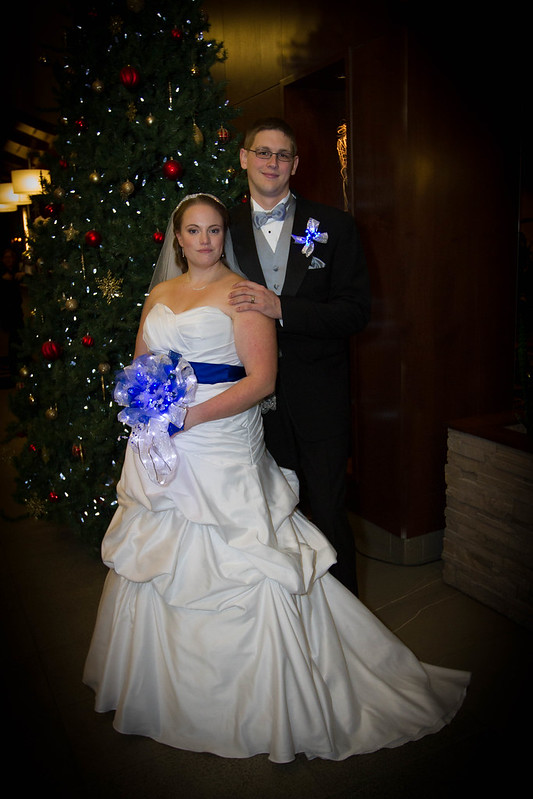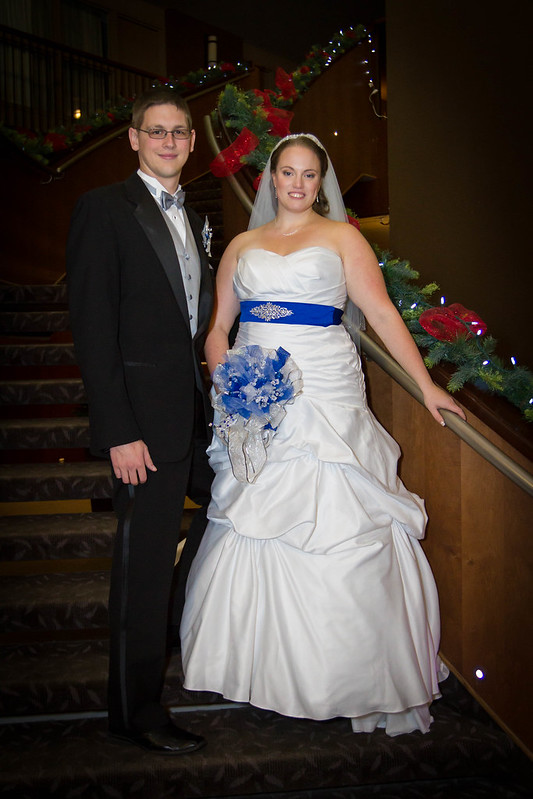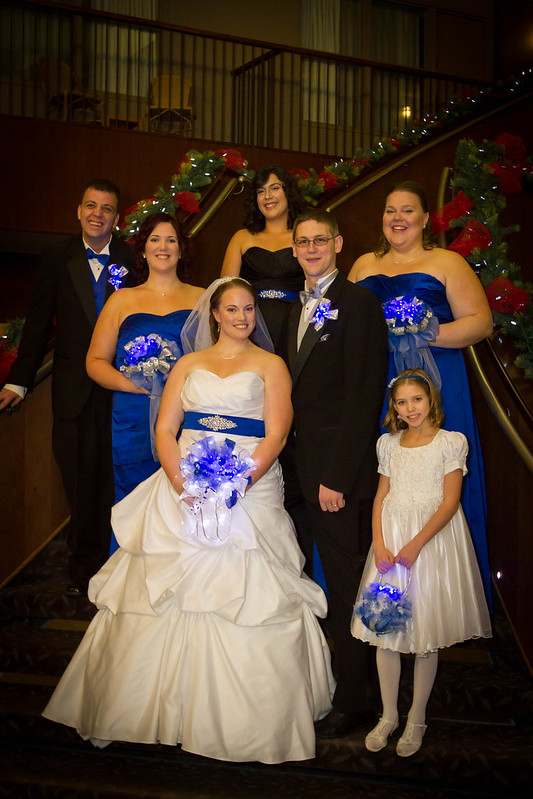
Photographing the Seitz family was a pleasure. I like outdoor portraits, but the December weather, combined with young children made it necessary to shoot indoors.
The location had large windows that helped to give a better quality of light. The rooms were large enough to fit everyone and we had a great time being creative and just playing.
That’s what makes a photo shoot fun. Encourage conversation and help them to relax. Many of my clients have a lot of ideas and just love to show off. It just takes a bit of confidence building to get them started. I look for the right position to shoot from and do a little bit of directing sometimes. The results are more natural and relaxed.
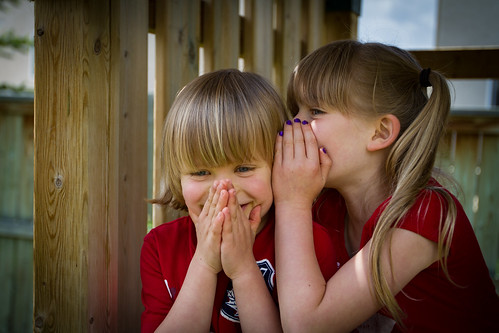
With as many kids as there were, it’s important not to let them feel like they’re being photographed. Some like to give a forced smile. I’ll take a couple of shots and then try to distract them. A candid photo where they are laughing or just being themselves are the best. If you tell them to try hard not to smile, they can’t help themselves and they think it’s funny.
Sometimes, an odd perspective loosens things up. I’ll give them a quick look at how it turned out and it helps them not to be so shy of the camera.?
Tags: Family, Photography, Portrait
A great activity for youth is a photo safari. With our Scouts, we hiked from Tom Campbell hill, just North of the Calgary Zoo, to downtown Calgary and back. Along the way, we discussed what things to think about while taking a photograph and helped them learn more about their cameras.
Being late November, it wasn’t a bad day for a hike. It was cool, but not freezing, so we were able to comfortably use our cameras without much worry about the batteries or our fingers getting too cold. As it was, we had a few problems with low batteries to start with.
We started early, hoping to catch a good sunrise, but the overcast sky didn’t quite agree with us. The rest of the day was filled with a lot of new discovery as the boys tried to be creative about their shots. We encountered a number of birds and animals that really got them excited. We found a stuffed frog that made for some amusement and started them off with something interesting to practice with.
We discussed how to emphasize the subject. Specifically that you first must identify the subject. Then simplify by either making the subject dominate the picture, or remove items from the background that would detract from the subject. When showing them their shots early in the day compared to later shots, they could see clear improvements.
I explained a bit about photographing buildings and how to keep the lines straight by making sure your camera is parallel to the face of the building.
Probably their favorite part of the day was the Chinese buffet at the end. We were all both hungry and tired, so it was a good way to cap off a great day.
Tags: education, outdoors, Photography
I attended this year’s Remembrance Day ceremonies at the Military Museums in Calgary as a leader with our Cubs and Scouts. It’s an annual event for us. Each year seems to get bigger. I wasn’t early enough to get the view that I wanted, but I’m tall, so I could manage some shots above the crowd.
I like to get shots that show the character of the event. In this case, it would be people in uniform. And I found some particularly interesting people in uniform.
And of course, I had to capture one that was just there because she had to be and wa
sn’t much interested in the long-winded rambling that accompanies pomp and ceremony. “When is it over dad?”
That’s one advantage of being on the ground. Of course, I would also love to have a really long lens and a roof like these guys did.
I’d be curious to see what they got. The rule of thumb for long lenses is that your shutter speed needs to be at least as fast as the length you’re shooting at. So, for a 200 mm lens, you need to shoot at 1/200 second or faster to keep from getting a blurred shot. If the lighting isn’t good enough, you can’t do it without a tripod.
After the ceremony, the museums were open to the public to view. The lighting in most parts are poor, so it’s hard to get much for shots without a flash. The problem with
using flash is that most exhibits are behind glass, so you often get a lot of glare.
There’s a new exhibit featuring naval items. One of my favourites is the ship models. They’re also behind glass. As you can see, they’re too delicate to risk someone touching it. They’re also nicely lit with huge windows allowing tons of natural light. The trick then is to try to position yourself to limit or eliminate reflection. You can also use a polarizing filter. That cuts a lot of light though, so you’ll need a tripod.
Tags: Events, museum, Photography, remembrance day
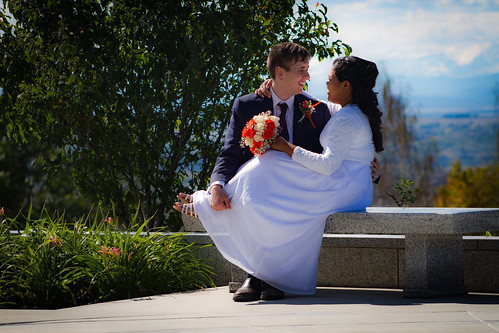
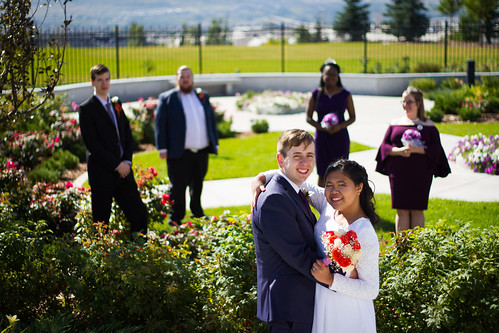
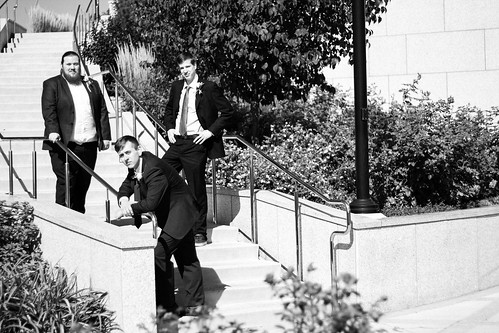
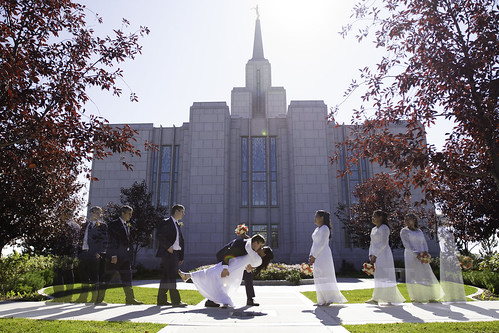
Heidi and Gary are a great couple. It was a pleasure to photograph them. They were sealed in the Cardston, Alberta Temple.
I was privileged to attend the ceremony. There is no photography permitted inside the temple. I can best describe it as simple, elegant, and divine.
This was only a week after Bior’s wedding and it was an amazing difference in weather. We had a warm, pleasant afternoon to shoot in. I took longer than expected, just because we were having so much fun.
One of my favorite things to do, is make composite photos. I positioned the camera in one spot and had them pose in several locations. Afterwards, I pasted together an image that they weren’t expecting. They were absolutely delighted by the result!
Tags: cardston, Photography, Wedding

Akeela and Bior’s wedding was definitely a challenge for all of us. The previous week was just beautiful and then we get this frigid day that a family from warmer climes just wasn’t used to. I’m native to Calgary, and I didn’t like it either. Had the weather co-operated, the ceremony was planned to be held in the yard.
The ceremony was small. It was held in a small room, so that had its own challenges. Despite the difficulty, the wedding and the photos turned out great.
We went to Fish Creek Park for the formals. We were past the fall colours, but the background of the trees still made for an interesting backdrop. There was a lot of room, but no warmth and a brisk breeze. They were able to put up with it long enough to get some good shots. The whole family was very friendly and fun to work with. They all wore fabulous outfits, especially Akeela with her beautiful henna tattoos.

Tags: fish creek, henna, Photography, Wedding
Fozia and Mike were a delight to shoot. The mix of culture made it easy to be creative and take some different shots than in traditional American weddings. Part of the wedding included a sand ceremony where each member of the family poured sand into a bottle, symbolic of the unifying of the family. It’s a very beautiful thing to see.
![]() |
![]() |
|
![]() |
This was my first wedding to use a 50mm lens almost exclusively. I pulled out the 75-300mm zoom lens once to do some close-up shots of some of the decor. The 50mm performed admirably. I had to be more active though and it forced me to re-think some angles. I think that made for a better variety of shots.
The ceremony, being indoors, required a bit more setup than I’ve done in the past. The lens helps to a degree. I can’t always shoot with a wide aperture because it limits the depth of field too much. Because of the angles I was at, I needed to make sure that enough people were in focus to make the shot usable.
Fozia and Mike gave me a lot of room to work with and were very accommodating. I was able to set up my lighting system in a way that lit up the room so that wherever I was, there was enough light to get the shot.
I used two umbrella strobes set in slave mode so that my any on-camera flash would trigger it. There’s an automatic setting for the flash that gives beautiful exposures if you do a pre-flash to lock the exposure. A wedding ceremony is too fast to be constantly locking the exposure for each shot. I set the flash manually and lowered the flash output on the camera (so I don’t waste battery), and just took pictures without worrying about the lighting anymore.
Slave strobes are a funny thing. They have an eye that detects a flash from any camera. They were pretty busy with other guests taking pictures also. I would hope that it improved their shots too, but I can’t be certain. When a strobe fires, there’s a tremendous energy release. It has to re-build the energy for the next shot. The time it takes to rebuild the energy is called the recycle time. Cameras with built-in flash use a battery, so sometimes the recycle time can be a few seconds long. With everyone else triggering the strobes, it can make a battery powered strobe be unavailable when you need it. The strobes I have are AC powered, so I never worried about recycle times. They were always ready.
We went to Lake Chaparral, in SW Calgary for the formals. The fall colours are an amazing feature for any shot. The lake offered a couple of waterfalls to work with, as well as many bridges, rock features, ponds, flower gardens, and a simple gazebo. The trees are significantly mature enough to offer a more forested feeling. My only complaint is that we spent too much time wanting to shoot something at each new feature. But I loved the gangster theme!
Tags: lake chaparral, Photography, Wedding
![]() |
| From Canoe Camp |
I love canoeing. It has the best of everything about camping. You get a peaceful paddle down a meandering river, interrupted at times with the roller-coaster excitement of rapids. I love the feeling of the water gently pulling me along while the bottom of the river whizzes by. It’s like the description of being in space where you’re traveling faster than a bullet, but it feels like you’re standing still.
![]() |
| From Canoe Camp |
On previous trips, I worried more about the safety of the camera, so I didn’t bring one, or I kept it more packed away so it wasn’t accessible. That was a mistake I won’t do again. So this time, when taking pictures on the water, I had to pay careful attention to my equipment.
I only brought the 50mm lens, to make it easier to carry. I put my camera (Canon Digital Rebel) in a smaller padded bag that fit nicely into a large ziplock. This would give me some peace of mind that it would at least float if we managed to upset the canoe. This meant that it took a little more time to set up the camera when I was ready to get the shot. That also meant that sometimes I missed the shot I wanted because I couldn’t get it ready in time. I would have taken more pictures if I had the camera more handy. I’d like to invest in one of those water-proof/shock-proof/freeze-proof cameras. I would certainly put it to the test.
To get the shots I wanted, it followed a general pattern:
- paddle hard ahead of the subject
- spin the canoe sideways so I don’t have to twist too much and set the canoe off balance
- drift a bit and prep the camera while my son keeps an eye on where we we’re going
- take a few shots
- scramble to put the camera away and grab my paddle before hitting the rapids
![]() |
| From Canoe Camp |
An approach I’d like to try in the future is to find a spot on shore, just past a set of rapids where I know the canoes will pass close. Then I’d just wait for them, using a longer lens if needed.
One of the unique things about water is the way it holds heat. During the day, the water heats up, along with the air. It stays warm over most of the night while the air cools considerably. In the morning, as the sun is rising, the temperature difference causes a thick mist or fog to form in the valley around the water that makes for surreal surroundings.
![]() |
![]() |
| From Canoe Camp | |
This year’s trip, we started on a Friday evening from Fish Creek Park in Calgary, just North of Highway 22X. We canoed to an island which is at, I believe the 13 km mark on this map. There’s a fair amount of fallen wood, and a well used fire pit. It’s a nice spot. The river at the back side of the island is slow and deep enough for a swim. Especially at the downstream end of the island.
We finished off the trip Saturday by traveling to McKinnon Flats where we met our pickup team. We had a beautiful hot, sunny day.
Tags: outdoors, Photography
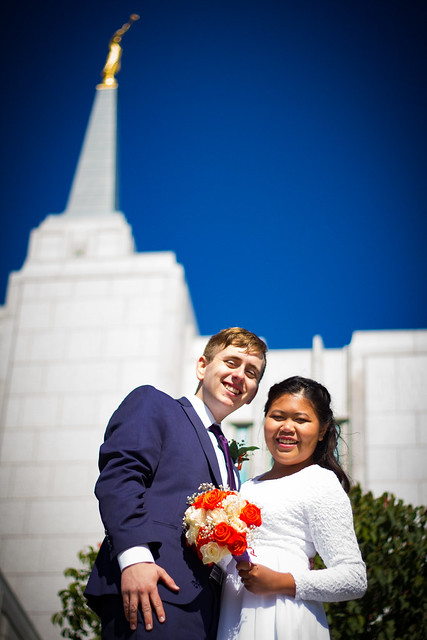
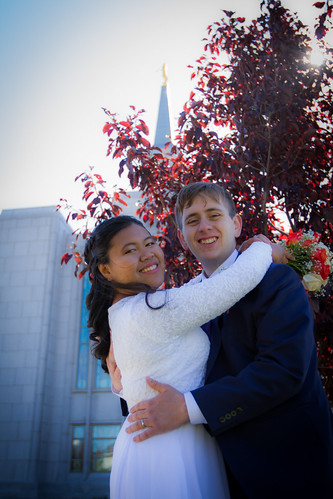
On Saturday, I shot the wedding formals and reception for the son of my friend Wendy, whose web site I also created and maintain. The site overlooked downtown Calgary from the Crescent Road chapel of The Church of Jesus Christ of Latter-day Saints. The couple is very photogenic and were great to work with.
For a technical note, I used a Canon Digital Rebel and the 18-55 mm kit lens as well as a 75-300 mm lens. I used a polarizing filter that made it a bit tougher to stay at a high shutter speed with the zoom lens, even in the bright sun. I don’t always like being tied to a tripod, but it would have helped here. I’m planning to purchase a 50mm f/1.8 lens that should make a big difference for some of my shots, especially indoor and low-light.
This is the first wedding I’ve shot using the RAW format. I’ve been using it now for a while and find that the buffer on the camera (it’s a first generation Digital Rebel) made me miss more shots because I’d have to wait for the buffer to empty. It’s really tough for active scenes like the bouquet toss. I’m saving up for the 50D.
Tags: Photography, Wedding
I attended the 2009 Southern Alberta Jamboree at Camp Impeesa last week. I was the main Scouter in charge of a patrol of 4 scouts, so most of my photography was focused on capturing their experiences there. Being involved in the activity meant that sometimes I would have to hand off the camera to someone else to take the shots. You don’t always get the best photos that way, but you can be surprised.
The Jamboree had a volunteer photographer wandering through the events. His shots were part of a slide show at the closing ceremonies, but, due to privacy concerns, that’s all we’ll ever see of those. So don’t ever rely on someone else’s work to record a special event.
What do you record on an event like this? From my experience I have a number of tips to pass on:
- I wanted to have something for each of them, so I looked for opportunities to highlight the single youth doing each activity.
- Sometimes I wanted to show the energy of the event, but not necessarily any faces. Most certainly though, I wanted to show them doing things as a team.
- Capture interesting things going on that give you context to what is happening outside of your group.
- Include friends that they make.
- Make sure to capture the all-important group shot.
- And don’t forget your camera back at the camp or you’ll be making extra trips.
Try to follow the rules of composition. Your memories should be artistic, but it’s best to just get any shot you can first, then you can try to refine it until the shot goes away.
Tags: outdoors, Photography
There are a number of heat sources to consider when your primary method of cooking isn’t available. You should become familiar and proficient with one or more of these. For your chosen method, you’ll want to make sure you have plenty of fuel on hand.
Propane
Propane is an excellent fuel for indoor use. It produces carbon dioxide as it burns and is therefore not poisonous. It does consume oxygen so be sure to crack a window when burning propane.
Propane stores indefinitely, having no known shelf life. Propane stoves and small portable heaters are very economical, simple to use, and come the closest to approximating the type of convenience most of us are accustomed to using on a daily basis.
The primary hazard in using propane is that it is heavier than air and if a leak occurs it may “pool” which can create an explosive atmosphere. Basement natural gas heating units CANNOT be legally converted for propane use. Again, the vapours are heavier than air and form “pockets.” Ignition sources such as water heaters and electrical sources can cause an explosion.
Propane is likely to be impossible or difficult to acquire during an extended emergency.
Wood
Hardwoods such as apple, cherry, and other fruit woods are slow burning and sustain coals. Hardwoods are more difficult to burn than softer woods, thus requiring a supply of kindling. Soft woods such as pine and cedar are light in weight and burn very rapidly, leaving ash and few coals for cooking. If you have a fireplace or a wood/coal burning stove, you will want to store several cords of firewood. Firewood is usually sold by the cord which is a neat pile that totals 128 cubic feet. This pile is four feet wide, four feet high, and eight feet long. Some dealers sell wooWoodd by the ton. As a general rule of thumb, a standard cord of air dried dense hardwood weighs about two tons and provides as much heat as one ton of coal. Be suspicious of any alleged cord delivered in a 1/2 or 3/4 ton pickup truck.
For best results, wood should be seasoned (dried) properly, usually at least a year. A plastic tarp, wood planks, or other plastic or metal Woodsheeting over the woodpile is useful in keeping the wood dry. Other types of fuels are more practical to store and use than wood or coal.
The penny wood stove only needWoods small pieces of wood, so it can effectively be supplied with wood from shrubs.
Solar
Food in a solar coWoodoker is generally not stirred or turned over, both because it is unnecessary and because opening the solar cooker allows the trapped heat to escape and thereby slows the cooking process. It can be checked every one to two hours, to turn the cooker to face the sun more precisely and to ensure that shadows from buildings or plants have not blocked the sunlight. If the food will be left untended for many hours during the day, then the solar cooker is often turned to face the point where the sun will be when it is higher in the sky.
Food cooks faster in the two Solarhours before and after the local solar noon than it does in either the early morning or the late afternoon. Larger amounts of food, and in larger pieces, take longer to cook.
You don’t need to add water tSolaro anything except grains because the food makes its own liquid. It tastes better because nothing dries it out.
White gas (Coleman fuel)
Many families have camp stoves which burn Coleman Fuel or white gasoline. These stoves are fairly easy to use and produce a great amount of heat. However, like charcoal, they produce vast amounts of carbon monoxide. NEVER use a Coleman Fuel stove indoors. It could be a fatal mistake to your entire family.
Never store fuels in the house or near a heater. Use a metal store cabinet which is vented on top and bottom and can be locked.
Kerosene
Kerosene (also known as Range Oil No. 1) is the cheapest of all the storage fuels and is also very forgiving if you make a mistake. Kerosene isn’t as explosive as gasoline and Coleman fuel. Kerosene stores well for long periods of time and by introducing some fuel additives it can be made to store even longer. However, do not store it in metal containers for extended time periods unless they are porcelain lined because the moisture in the kerosene will rust through the container causing the kerosene to leak. Most hardware stores and home improvement centres sell kerosene in 5 gallon plastic containers which store for many years. A 55 gallon drum stores in the back yard, or ten 5 gallon plastic containers will provide fuel enough to last an entire winter if used sparingly.
When kerosene burns it requires very little oxygen, compared to charcoal. You must crack a window about 1/4 inch to allow enough oxygen to enter the room to prevent asphyxiation. During combustion, kerosene is not poisonous and is safe to use indoors. To prevent possible fires you should always fill it outside. The momentary incomplete combustion during lighting and extinguishing of kerosene heaters can cause some unpleasant odours. To prevent these odours from lingering in your home always light and extinguish the heater out of doors. During normal operation a kerosene heater is practically odourless.
Charcoal
Never use a charcoal burning device indoors. When charcoal burns it is a voracious consumer of oxygen and will quickly deplete the oxygen supply in your little “home within a home.” Furthermore, as it burns it produces vast amounts of carbon monoxide which is a deadly poison. If you make the mistake of trying to heat your home by burning charcoal it could prove fatal to your entire family. Never burn charcoal indoors.
Instant light charcoal containing lighter fluid, such as Kingsford Match Light, should not be used where the gasses interact with the food, such as in barbeques or the cardboard oven. Dutch ovens are better suited for instant light charcoal. When using the cardboard oven, let the charcoal go completely white before adding the food. For cakes, adding fruit to the bottom for an upside-down cake makes it harder to burn the bottom.
Alcohol
Alcohol burns cleanly and is odourless, so it is safe to use indoors. It burns very quietly with a near-invisible flame, so it is important to be careful around alcohol fuelled stoves. The fuel is not explosive and can be easily extinguished. It stores well in plastic containers and is available in 4 litre jugs at Home Depot, labeled as Methyl Hydrate. Look in the paint section.
Internet Resources
Dutch Oven
- http://papadutch.home.comcast.net/~papadutch/
- http://www.dutchovendude.com/
- http://www.backwoodshome.com/articles/beattie47.html
Solar
- http://solarcooking.wikia.com/wiki/Windshield_shade_solar_funnel_cooker
- http://www.knowledgehound.com/topics/solarcoo.htm
- http://en.wikipedia.org/wiki/Solar_cooker
- http://solarcooking.org/solarcooking-faq.htm
Cardboard Oven
Hot Box
Pressure cookers are perfect for use with hot box cooking. Cooking time is shorter and higher temperatures can be reached.
- http://ourldsfamily.com/wonderbox/
- http://www.hedon.info/firelesscooker
- http://www.wisebread.com/save-energy-costs-by-cooking-with-a-hot-box
Pot Cozy’s are basically a hot box that custom fits your pot. You can buy them at MEC
Or make your own pot cozy
Penny Alcohol Stove
Penny Wood Stove